
Cohab – Community Housing Platform
Role: UX/UI Designer
Tools: Figma, Adobe Illustrator
Timeline: 2 months
Project Overview
Cohab is a conceptual platform aimed at revolutionizing community housing by connecting residents with affordable living spaces and fostering communal engagement. The project focuses on creating a user-friendly interface that simplifies the search and application process for co-housing opportunities.
Objective
Design a loud, vibrant, and contemporary homepage that captures the agency’s dynamic spirit, reflects their services in a no-nonsense way, and stands out visually from other agencies in the space.
Design a responsive web platform that allows users to easily discover, apply for, and manage co-housing arrangements, while promoting a sense of community and shared responsibility among residents.
Problem Statement
While the agency had strong creative output, their existing website did not convey their design chops or bold brand values. The challenge was to balance visual expression with usability, making something eye-catching that still guides users toward learning more and contacting them.
Design Process
Ideation & UX Strategy
Created wireframes for core flows: browsing listings, filtering by preferences, applying to homes
Mapped out multi-user considerations for both applicants and current residents/admins
Designed personas reflecting solo renters, families, and students

Visual Identity & UI Design
Warm, Playful, and Purposeful
CoHab’s design system was shaped by its mission: to make shared living feel approachable, inclusive, and empowering. Every design choice—from color to type to UI components—reflects that purpose.
Brand Story
Moving to a new city is exciting—but finding the right place and the right people? That’s the hard part.
CoHab was created for people just like you—adventurers, dream-chasers, and fresh-start seekers who want more than just a roof over their heads. We believe a home isn’t just where you live—it’s who you share it with.
That’s why CoHab connects you with like-minded roommates and personalized listings, making it easier than ever to find a home that feels like home.
Logo System
Meaningful Simplicity
The CoHab logo visually captures the heart of the brand’s mission:
Connection and community in shared living.
-
🏠 The house shape represents shelter and belonging
-
💬 The speech bubble + three dots symbolize communication and shared experiences


Typography
Typography plays a key role in CoHab’s visual identity—balancing personality with clarity to express both warmth and professionalism.


Color System
Neon Yellow serves as the primary accent, symbolizing optimism, friendliness, and connection.
Deep Charcoal grounds the palette with contrast and sophistication, supporting readability and balance across the interface.
Light Aqua adds a refreshing, calming layer—reinforcing the app’s social, easygoing tone.


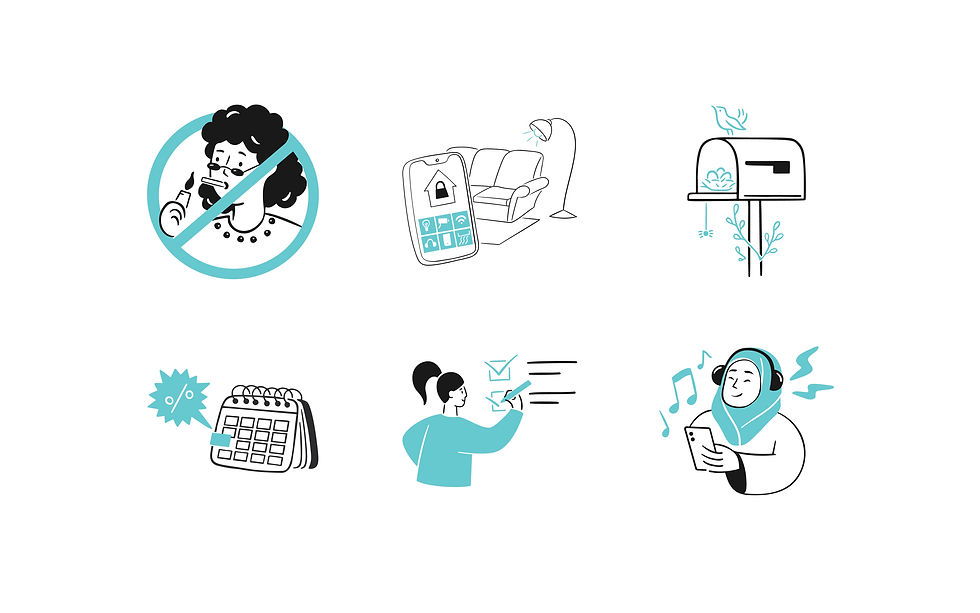
Iconography & Elemetns

User Flow
The UI supports a linear but flexible journey:
-
Homepage (Discovery)
-
Search & Filters (Refinement)
-
Listing View (Evaluation)
-
Profile Interaction (Connection)
-
Application Process (Action)
-
Dashboard / Community Hub (Engagement)

Homepage
The homepage is a personalized dashboard designed to keep users engaged, informed, and progressing toward better matches.
Key Elements:
-
User Identity: Profile photo and name (e.g., Sophia C.) reinforce personalization and create a sense of ownership.
-
Progress Bar Callout:
A prominent banner (e.g., “You’re Almost There!” 🚀) with a circular progress indicator encourages users to complete their profile. It’s friendly, unobtrusive, and motivational.“Complete your profile to get the best roommate matches and personalized listings.”

Onboarding
Rather than overwhelming users with long forms, CoHab uses a progressive disclosure model for profile setup. The experience is structured to feel rewarding and lightweight — helping users build out their profile gradually.
Soft onboarding in action — a lightweight prompt appears only when the user engages, collecting key info without interrupting the flow.


Roommate Profiles
Match profiles display a compatibility score based on weighted inputs: 40% lifestyle alignment (e.g., cleanliness, sleep schedule), 30% shared interests, and 30% living preferences (e.g., pets, guests, neighborhood). Relevant details like preferred locations and common interests are surfaced to help users make informed, confident choices when reaching out.


The final match score is calculated by combining the user's percentage match in each category, weighted by importance. Lifestyle factors contribute the most to ensure the foundation of compatibility is built around daily routines and shared boundaries.
Profile
The profile screen is designed to feel personal and purposeful. A soft profile strength banner encourages completion without pressure, while key details—like location, preferred neighborhoods, lifestyle preferences, and shared interests—are surfaced upfront to support quick, meaningful decision-making.

Results + Reflections
Cohab successfully bridges the gap between housing platforms and social apps by prioritizing people over listings. Through a bold yet approachable brand identity and a user-first product design, the platform offers a smooth, human-centered experience—from onboarding to matching.
Design decisions were rooted in reducing friction, encouraging connection, and surfacing relevant information at just the right moments. The soft onboarding, compatibility scoring, and personality-driven profiles work together to make shared living feel intuitive and less transactional.
This project reinforced the value of designing with both emotional and practical needs in mind—balancing brand clarity, user behavior, and real-world living dynamics.